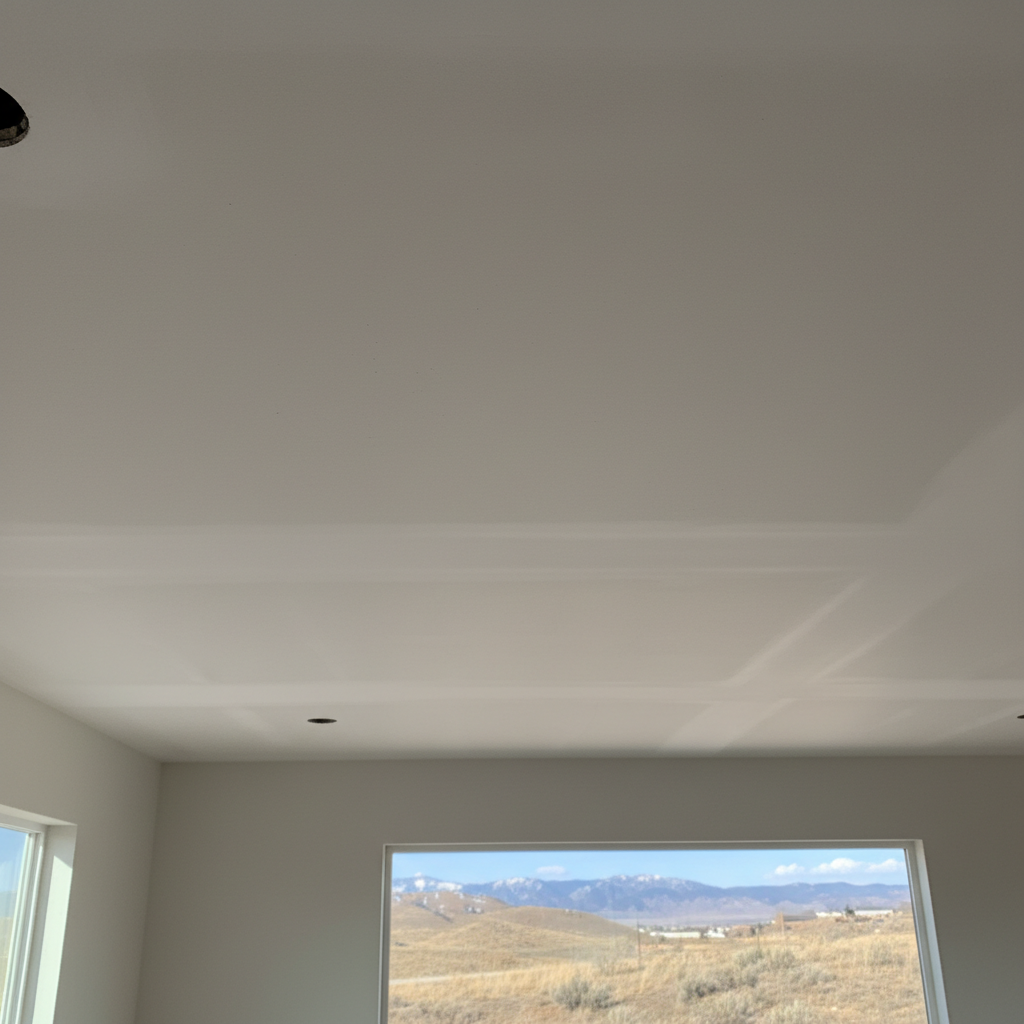
So, you're staring up at a ceiling and thinking, "I bet I could put up drywall there." Maybe you're finally finishing the basement, or adding a new room, or just ripping out some old, saggy stuff. That's awesome! Plenty of homeowners here in West Jordan are pretty handy, and some drywall tasks are definitely within reach for a DIYer. But ceiling drywall? Oh, that’s a whole different animal than walls, and it’s where I see folks get into real trouble quite often.
Before You Even Think About Lifting a Sheet
First things first, let's talk safety. You'll be working overhead, so you absolutely need good scaffolding or some sturdy saw horses with planks across them. Don't even *think* about trying to balance on a wobbly chair, okay? You'll also want eye protection, a good dust mask – drywall dust is no joke – and gloves, because those edges can really cut you.
Next up, measure everything. Then measure it again. Seriously. You need to know your ceiling joist spacing, which is usually 16 or 24 inches on center. You'll want your drywall sheets to run perpendicular to those joists. This gives you more spots to screw into and helps keep the ceiling from sagging. Also, double-check for any existing plumbing or electrical lines. You really don't want to screw into a water pipe or a live wire. Believe me, I've seen it happen, and it's a huge mess.
Think about the kind of drywall you'll use. Standard 1/2-inch is common for ceilings, but if your joists are spaced 24 inches apart, you might want to consider 5/8-inch drywall instead. It's heavier, sure, but it resists sagging much better. For bathrooms or other damp areas, you'll need moisture-resistant drywall (that's the greenboard or purple board). Don't try to save a few bucks here; it'll only cost you more in repairs down the road.
The Installation: Where DIY Gets Tricky
This is where things get real. Trying to lift a 4x8 or 4x12 sheet of drywall over your head and hold it in place while you screw it in? That's tough. Even tougher if you're by yourself. A drywall lift is almost a must-have for ceiling work, especially if you're tackling a whole room. You can rent these, and honestly, they're worth every single penny.
Here's what you'll be doing:
- Cutting: Measure your cuts carefully. Score the paper with a utility knife, snap the board, and then cut the paper on the other side. For electrical boxes or can lights, you'll need a drywall saw or a RotoZip tool.
- Lifting and Fastening: Get that sheet up there. Use the lift, or if you've got a buddy, one person holds while the other screws. You want screws every 7 inches along the edges and 12 inches in the field (that's the middle of the board). Make sure the screw heads are just dimpled below the surface, not tearing right through the paper.
- Staggering Joints: Don't line up all your butt joints (the short ends of the drywall sheets). Stagger them, just like bricks in a wall. This makes the ceiling stronger and helps prevent cracks later on.
- Dealing with Angles and Corners: This is where things get fiddly. Cutting precise angles around vents or odd-shaped rooms definitely takes some practice.
Now, can you do all this yourself? Absolutely. I've seen plenty of West Jordan homeowners put up some decent drywall. But it's physically demanding, and it takes a lot of patience. Your arms are going to be screaming, and your neck will probably feel like you just wrestled a bear. If you're not used to this kind of work, you'll be sore for days, trust me.
After the Boards Are Up: Taping and Finishing
Okay, you've got the sheets up. Great! But that's only half the battle. Taping and mudding a ceiling is truly an art form. You're working against gravity, trying to get perfectly smooth, seamless joints. This is where most DIY ceiling drywall projects really show their amateur status.
You'll need to apply tape to all the seams, then multiple coats of joint compound (we call it mud), sanding between each coat. Feathering out those edges so they blend perfectly into the ceiling is tough. If you don't do it right, every imperfection will show under paint, especially with the harsh afternoon sun we get here in Utah bouncing off the ceiling. A bad mud job means wavy lines, visible tape, and screw pops. It's frustrating to look at every single day.
When to Call a Pro (Like Neighborly Drywall Co.)
Look, I'm all for DIY. It saves money, and there's a real sense of accomplishment when you finish something yourself. But here's when you should seriously consider calling in Neighborly Drywall Co. or another local professional:
- Large Areas: If you're doing an entire basement or a big great room, the sheer amount of work is immense.
- High Ceilings: Anything over 9 feet gets exponentially harder and more dangerous.
- Complex Layouts: Lots of angles, soffits, or cutouts for recessed lighting? That's definitely pro territory.
- You Want a Perfect Finish: If you're aiming for a perfectly smooth, flawless ceiling that looks like it was always there, a professional finisher is your best bet. We've got the tools, the experience, and the muscle memory to make it happen efficiently and beautifully.
- Time is Money: If you're spending every evening and weekend for weeks on end, how much is your time really worth?
Even if you hang the drywall yourself, you can always hire out the taping and finishing. That's a common compromise I see, and it often works out well. You do the heavy lifting, and we come in and make it look pristine. Just make sure your hanging job is solid before we get there – a bad hang makes a good finish impossible.
Ceiling drywall isn't impossible for a homeowner, but it's probably the most challenging part of drywall installation. Be honest with yourself about your skills, your time, and your patience. Sometimes, paying a pro is the smartest investment you can make for a beautiful, long-lasting result.